Virtual Card
Last updated: 2026-08-11

When the advertising account prompts that the payment failed, the most common reaction is to immediately find a “new card” and try again. People who have actually done continuous delivery will be more cautious: the same failed transaction is submitted continuously, which may leave multiple pre-authorizations; when the account information is not aligned, changing the card will not solve the problem; what is more troublesome is that the team cannot tell in the end whether it is platform review, payment information, or card restrictions.
When choosing a virtual card for advertising, don’t ask “which one is the most stable”. First, break down your payment link: which country or region the advertising account is registered in, what is the billing information, what is the settlement currency, whether 3DS is required, and what is the peak value of daily consumption and automatic deductions. The card is only one part of the process and cannot replace platform review, nor should it be used as a tool to circumvent merchant rules.
Advertising needs to confirm payment ability first
Small-amount testing, stable consumption, and multiple advertising accounts in parallel require different card management methods. The table below can be used as a communication draft before establishing a card.
| Usage situations | Ability to prioritize verification | Common Misunderstandings |
|---|---|---|
| First payment for new account | Card information, billing address, 3DS jump | Only look at the account balance and ignore the billing information |
| Accounts that have been steadily consumed | Single/daily/monthly limit, automatic deduction balance | The limit is only set according to the daily budget, without reserved taxes and fluctuations |
| Multi-account team | One account, one card, person in charge, backup card | Multiple accounts share one main card and cannot be located after failure. |
| Multi-currency placement | Merchant settlement currency, exchange rules, and final deduction amount | Treat the price displayed on the page as the final deduction amount |
| Refund or dispute follow-up required | Transaction flow, order number, refund status | Only screenshots are left, no order and card side records |
For the advertising team, “being able to pay” is just the starting point. Being trackable, limitable, and being able to explain problems clearly are the capabilities that truly save you worry when running over a long period of time.
Why 3DS, billing address and account information are often wrong
3DS is a cardholder verification that may occur during the payment process; the billing address is part of the merchant’s verification of payment information; the advertising account itself may also have independent subject, region or payment method review. The three are not the same thing, nor can they replace each other.
In practice, the most common problem is “filling in the shipping address, office address and card billing address mixedly”. Please refer to the card details or the billing information provided by the service provider and fill it in truthfully; do not make up your address or try repeatedly with inconsistent information. When the verification window pops up on the payment page, complete the verification in the same order process, and then return to the original page to confirm the order status.
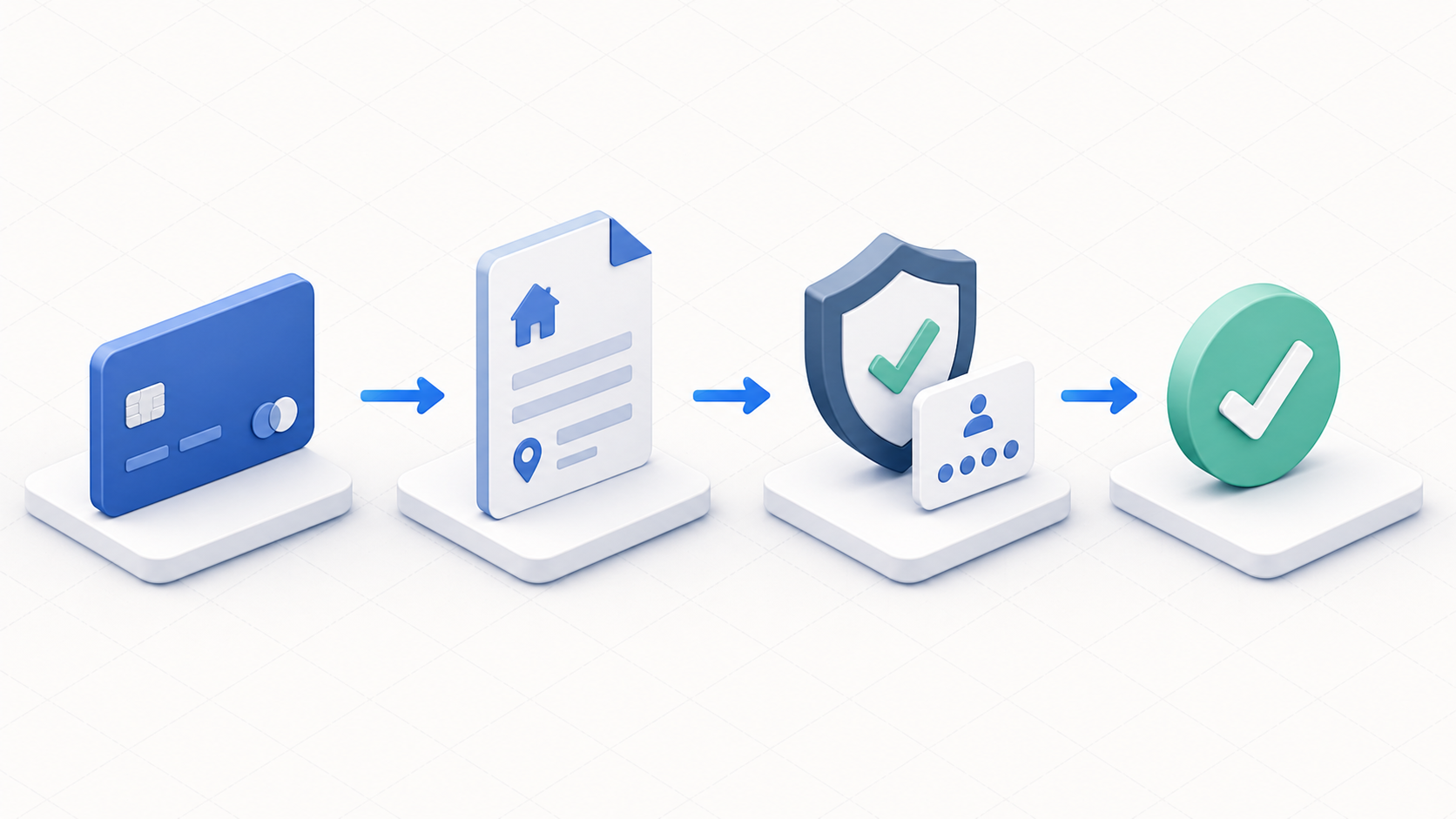
It is recommended that the following four items be included in the pre-launch checklist within the team:
- The country/region, subject information and settlement currency of the advertising account have been confirmed by the person in charge;
- The card status is normal, not expired or suspended, and the online payment permissions and limits are sufficient;
- Billing information comes from card details, not ad hoc guesses;
- 3DS verification is completed by authorized personnel, and the verification time and order number are recorded.
When payment fails, locate it first and do not try again continuously.
After the first failure, pause and retry continuously. Open the payment prompt, card side transaction record and order page of the advertising platform, and look at the time, amount, currency, merchant name, order or advertising account number together. The goal here is not to immediately determine who has the problem, but to determine at which layer the failure occurred.
| What you see | Priority investigation direction | Not recommended actions |
|---|---|---|
| The advertising platform does not generate payment records | Account information, payment method or platform review | Continuous refresh and repeated binding |
| Card side displays Processing | Pre-authorization or liquidation has not yet ended | Immediately deduct money again for the same order |
| Clear rejection on the card side | Balance, limit, card status, merchant restrictions | Changing cards without reading transaction notes |
| Completed 3DS but the order has not taken effect | Merchant order status, bounce process, account review | Treat the success of 3DS as an inevitable success of the order |
If you need to consult customer service, it is much more effective to submit the “complete context of desensitization” than just saying “the card is not working”: transaction time (including time zone), amount and currency, merchant name, card tail number, order number, page prompt, and whether to complete 3DS. The complete card number and security code should not be sent to anyone.
Payment card permission system for multiple accounts
After the advertising account is expanded, the payment card should not continue to serve as a public wallet. A method that is easier to implement is: each account has a main card, and the main card has a clear responsible person and a budget limit; a backup card is only used under established switching conditions; the finance retains recharge, consumption, refund and exception handling records.
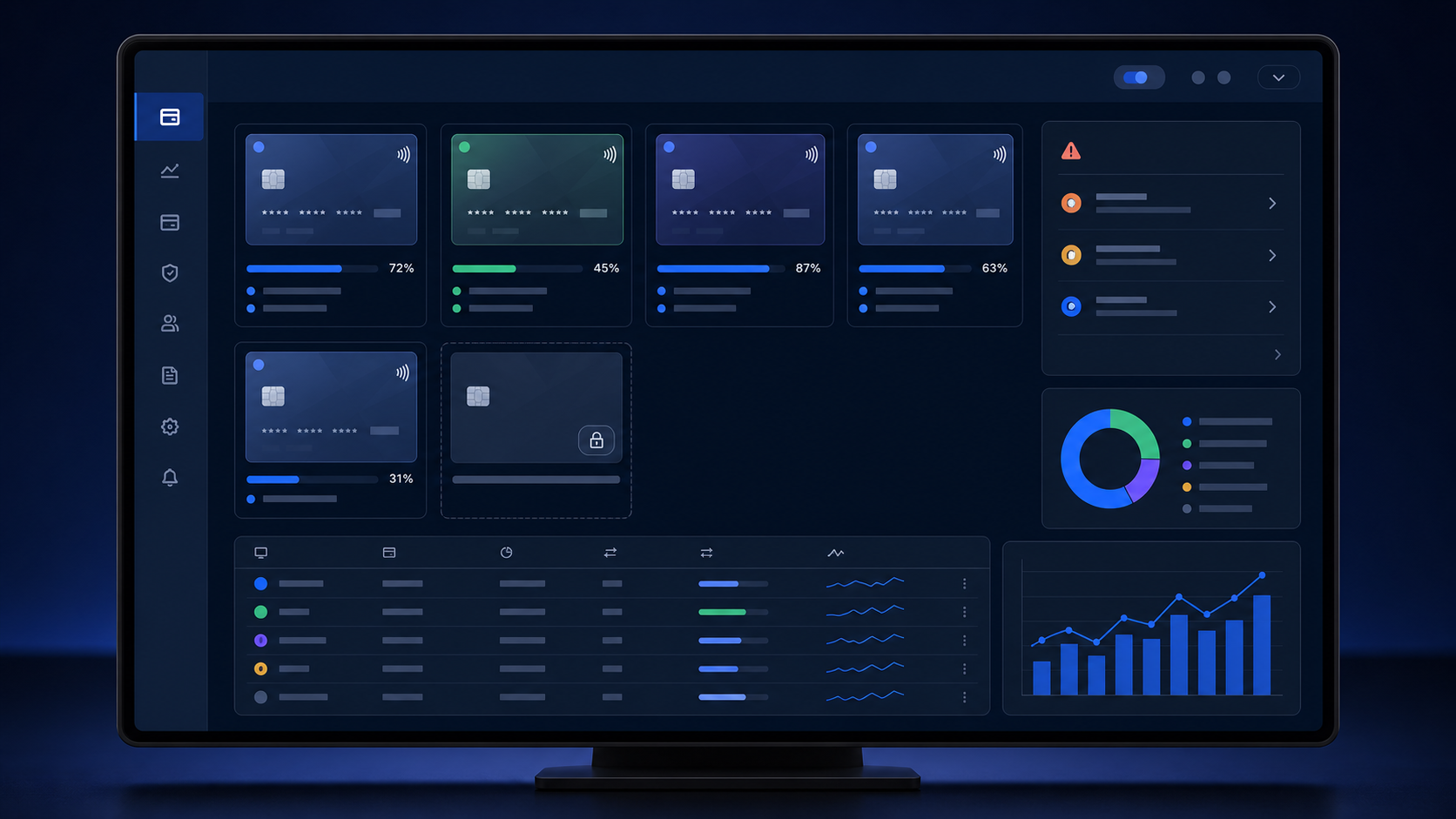
You can start with a very simple card ledger:
| Field | Record content |
|---|---|
| Card usage | Corresponding advertising platform, advertising account or project |
| Responsible person | Who can view the information and adjust the limit |
| Quota | Single transaction, daily, monthly limit and balance warning line |
| Billing information | Only save compliant and desensitized management information |
| Exception record | Failure time, reason, handler, and handling results |
| Refund follow-up | Original order, refund amount, estimated arrival and actual arrival |
The value of this method is not to make the process very complicated, but when consumption suddenly rises or payments are abnormal, the team does not need to guess “who changed the limit last time” from the chat history.
12-point checklist before going live
- Account region, settlement currency and subject information have been confirmed
- Payment cards are only bound to agreed accounts or projects
- Card status, validity period and online payment permissions are normal
- Available balance includes tax, pre-authorization and room for exchange rate fluctuations
- Single transaction, daily and monthly limits match the delivery rhythm
- Fill in the billing address truthfully according to the card information.
- The person in charge of 3DS verification and the contact information are clear
- The team has backup cards, but does not use them as a tool for frequent trial and error
- When payment fails, it will be recorded first and then processed without retrying continuously.
- The advertising platform order number can correspond to the card side transaction
- Record refunds, pre-authorizations and actual deductions separately
- It is known that merchants, regions and account review restrictions are subject to platform rules.
Related reading
- “How to troubleshoot Google Ads payment failure: billing information, country, currency, payment method and card status”
- “12 Checks Before Paying for Ads: Billing Details, 3DS, Refunds and Backup Methods”
- “How the advertising team can set independent VCC limits for different accounts to avoid losing control of the budget”
Tips: Virtual cards can help teams manage quotas and transactions, but do not guarantee the account review, payment review or delivery results of any advertising platform. All information should be true, accurate, and subject to the current rules of the merchant and card issuer.
Virtual Card
Original article by Virtual Card Reviews & Cross-Border Payment Guides. If republishing, credit the source: https://visaspay.com/en/how-to-choose-a-virtual-card-for-advertising-3ds-billing-address-and-how-to/