Virtual Card
When understanding the KYC-free virtual card, you can check it from three aspects: funds, account rules and platform information. Use the table of contents below to jump directly to the relevant chapter.
“No KYC, instant card opening, low threshold” can easily attract people who are looking for a virtual card for the first time. The problem is not whether a certain platform requires identity verification per se, but whether users can find clear entities, rules and support channels when balances are not accounted for, merchant refunds are delayed, and cards are deactivated.
No one should understand “KYC-free” as being able to circumvent region, identity, anti-money laundering, tax or platform payment rules. For legal and compliant individuals or companies, what really needs to be compared is transparency, financial security, refund paths and responsibility boundaries, not who has the fewest review steps.

What are the three types of risks to look at first when evaluating KYC-free virtual cards?
The first category is information risk: there is no clear subject, service terms, fee schedule and customer service channels. The second category is capital risk: it is unclear what the balance will be after recharge, the refund path, and the balance after the card expires. The third category is compliance risk: users think that “KYC-free” can circumvent the requirements of merchants or card issuers, which ultimately leads to payment failures, account restrictions, or difficulties in fund processing.
| Items that need to be verified | Relatively reliable signal | Signs you should be more vigilant about |
|---|---|---|
| Platform main body | The website, terms, privacy and support channels are consistent | Only anonymous groups, temporary links or no subject description |
| Fee Rules | The conditions for recharging, exchanging currency, opening a card, and refunding can be checked | Only promote low rates without any restrictions |
| Refund Processing | There is a refund and non-receipt processing process | Just says “contact customer service” with no time limit or credential requirements |
| Use of funds | Balance, card status and transaction details can be traced | No transaction record, frequent change of payment methods |
| Risk Communication | Explain the region, merchant, identity and risk control restrictions | Implying that verification or platform rules can be bypassed |
Why group chat or robot card opening requires more verification
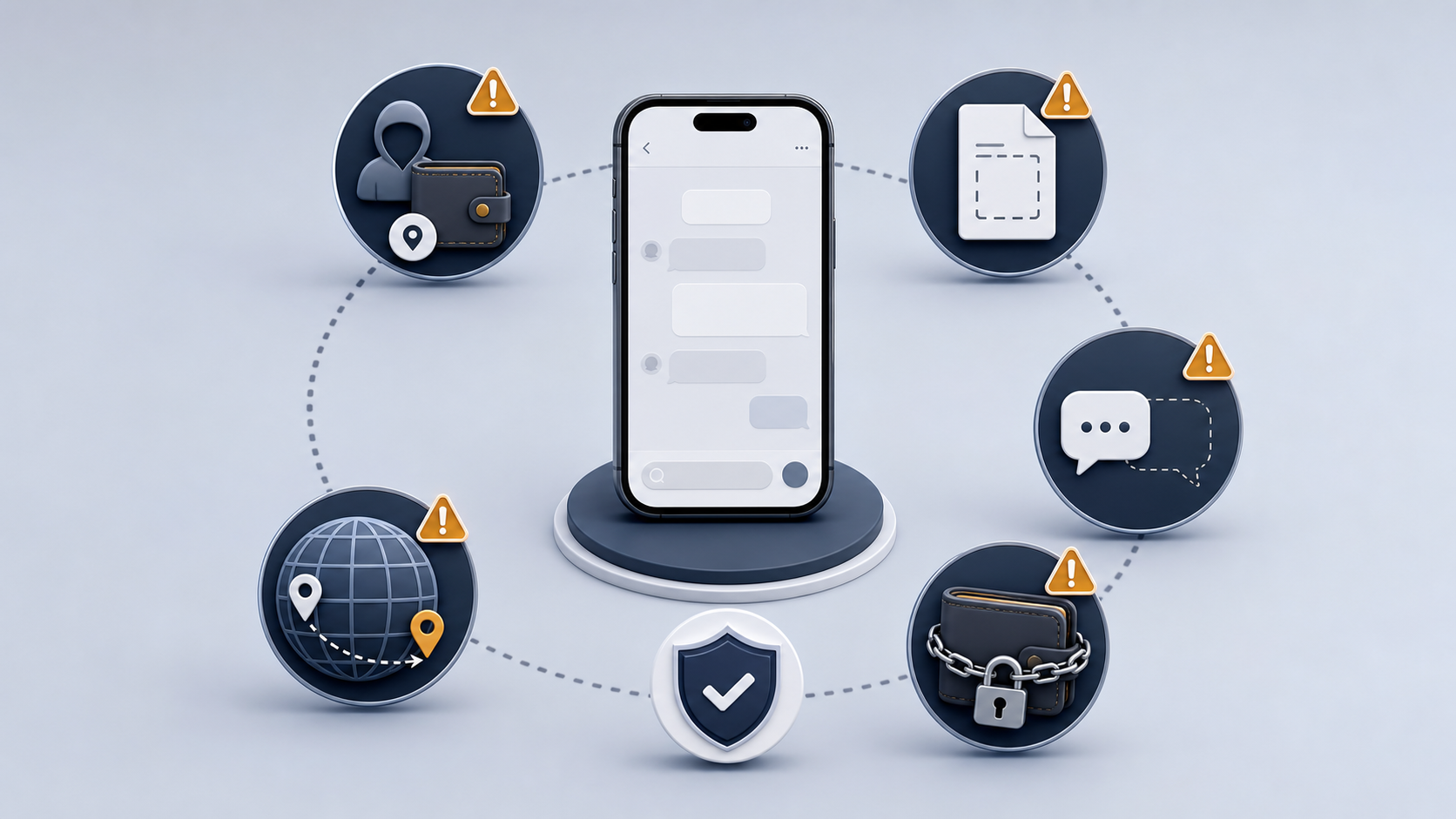
Chatbots or self-service entrances in groups may not necessarily have problems, but their common risks are: rapid changes in links and operating entities, rules scattered in chat records, and no stable work orders and responsible persons when refunds or card status abnormalities occur. When encountering such channels, at least do not transfer large amounts of funds at the beginning, and do not skip rule verification just because of “recommendations from acquaintances.”
A safer approach is to test with a small amount and keep the recharge credentials, transaction records and official support entrance. The purpose of the test is not to verify “whether restrictions can be bypassed”, but to verify whether the platform can provide clear transaction records and problem handling paths under normal and compliant use.

What do KYC and KYB mean to individuals and businesses respectively?
KYC is the verification of personal identity; KYB is the verification of corporate entities, beneficiaries or business information. When an enterprise requires multi-person permissions, purchase reconciliation, higher limits or continuous payments, KYB is often closer to the path of sustainable use than “no data required at all”. Specific requirements depend on the service provider, card issuer, region and business type.
What is the difference between card removal, upstream card suspension and normal card removal?
Just because the card can be used for payment, it does not mean that the balance can be withdrawn at any time; the suspension of the platform does not mean that it has been confirmed that the money has been withdrawn. When judging the problem, it is necessary to separate the nature of the event from the financial result: the operator lost contact and there is no executable balance processing path, which is a risk signal that requires focused investigation; the upstream card termination, compliance adjustment and announcement of withdrawal should be recorded separately, and fraud cannot be inferred just by card suspension.
- Suspected payment or loss of contact: The responsible party cannot be contacted, withdrawals have no results for a long time, and announcements and work order channels disappear. Evidence should be preserved; whether it constitutes fraud or embezzlement should be based on the investigation and the conclusion of the competent authority.
- Upstream suspension or restriction: The card counter can still be logged in, but some card segments or cards are deleted and transactions are rejected, which may involve termination of card issuance cooperation, unauthorized resale or risk control review. The key is how to handle unused balances and refunds in transit.
- Announced service suspension and cancellation: Announcing the service suspension date, withdrawal arrangements and follow-up contact channels. The announcement commitment does not mean that all users have actually received refunds, and individual payment results still need to be verified.
2025-2026 Cases: Which ones have a public basis?
Data verification is as of October 16, 2026, and 2026 is only for the year. Included in this collection 3 samples of card suspensions or policy changes that explicitly involve KYC exemption (1 in 2025, 2 in 2026), listed separately 2 comparative cases announcing service suspension in 2025. This is a sample of cases compiled from the following sources. It is not an industry census, nor is it “5 KYC-free platforms running away”.
The number of companies, number of victims, total losses or incidence rate of “missing out due to KYC-free card platforms” from 2025 to 2026 that can be verified and unified has not yet been found. This material is not sufficient to identify the following platforms as scammers, nor can “no evidence obtained” be understood as “the number of scammers in the industry is zero.” The card suspension time and the KYC-free mode appear at the same time, which is also not enough to prove that all service suspensions are caused by the KYC-free mode.
Three card suspension samples that clearly involve KYC exemption
| Platform and event time | What does the public material indicate? | No conclusion can be drawn from this |
|---|---|---|
| PayWithUs October 2025 |
Fintech Business Weekly’s investigation back on February 8, 2026 stated that the site was still advertising KYC exemption in early October 2025. After media inquiries, the card segment provided at that time seemed to have been deactivated, and existing cards were displayed as deleted; customer service subsequently required KYC.View original survey → | The report also mentioned that cards continued to be provided thereafter; this cannot be used to claim that the entire platform has been permanently shut down, let alone to determine the amount of money or to calculate user losses. |
| UnCash February 2026 |
Payment Expert reported on February 11 and showed a screenshot of the platform’s statement: UnCash announced that it would immediately close the card and arrange for a balance refund. The statement claims that about 90% of its cards use the Mastercard network.View reports and statement screenshots → | 90% is the platform’s self-report of the card network composition, not the ratio of fund losses. The report is not an audit of refund receipts, and it cannot be inferred that all balances have been refunded or are all lost. |
| CinCin March 2026 |
Fintech Business Weekly reported on March 22: The Sutton/Bluebanc path card for testing was still available on Friday and was no longer available on Saturday after reporters contacted the relevant agencies. Bluebanc said it has no partnership with CinCin and said the cards in question were resold without authorization by third parties.View original survey → | Conclusion Regarding the cards and paths reported in the test, it cannot be expanded to the point that all cards fail and the entire platform runs away, nor can the recharge transaction volume be regarded as the amount of loss. |
Comparison of service suspension: There is a withdrawal arrangement, which cannot be counted as “KYC-free escape”
- OneKey Card: The official timetable states that services will be completely stopped on January 31, 2025. In the early stage, registration and recharge, card balance transfers to wallets, and arrangements for cash withdrawals and subsequent consumption refunds have been stopped. This is a case of announced suspension of service. This section has not verified the KYC conditions of all historical card types and is not included in the above KYC-free sample.Official offline announcement →
- Dupay: On October 20, 2025, the official channel announced that all services would be stopped on November 30. It stated that 6 upstream suppliers had been replaced and funds were still frozen. It also stated that relevant funds had been advanced, cash withdrawals had been arranged, and manual processing after closure had been arranged. These are the statements in the platform announcement, which do not mean that all users have been independently verified, nor are they sufficient to confirm that the payment has been made. All of its historical products are not classified as KYC-free here.Official channel suspension announcement →
Common tips from cases: You should verify who provides you with services, whether the card is authorized, and how to get the balance back after the card is suspended. Completing KYC cannot eliminate platform operation, upstream cooperation and fund processing risks.
Eight risks that are easier to ignore than “no real-name, low card opening fee”
- Platform balance and card balance are not the same thing. First ask where the recharge is deposited, whether it supports transfer out, and where the level will be withdrawn; showing money on the interface does not mean that you can withdraw money immediately.
- The cardholder and the actual user may not be consistent. If the card actually belongs to someone else or a third-party company, you may not have independent authority to handle it when supplementary information, disputes or card suspension occur. Do not purchase other people’s real-name accounts or rely on false information to use them.
- Multiple card platforms may share the same upstream. Changing websites, robots or brands does not necessarily diversify risks. Interruption of the same card issuance path may affect multiple entrances at the same time; BIN cannot independently prove the authorization relationship.
- Registration is free of information, which does not mean that withdrawals are always free of review. Before depositing money, you should check the supplementary certification, fund source review, regional restrictions and balance processing rules when the review fails.
- A successful refund does not mean that you have been able to get your funds back. Merchant refund, card credit, platform balance and cash withdrawal are different links. In particular, check the refund path for canceled cards, expired cards, and in-transit refunds after service suspension.
- Hidden costs may arise at exit. Check the recharge, exchange spread, cross-border, chargeback, low balance, long-term non-use, checkpoints and withdrawal fees item by item; don’t just compare the unit price of the card.
- A small success is not proof of long-term safety. The test can only verify the payment and recording process at that time, but cannot prove sufficient reserves, permanent cooperation with upstream, or refunds in the future. The balance should be controlled based on recent actual use.
- Secondary fraud may occur after the service is stopped. Be wary of strangers asking for “unfreezing fees”, “deposits” or remote control permissions. Only process from independently verified official portals and do not hand over passwords, verification codes, complete card numbers or wallet mnemonics to the person you are chatting with.
What should I do if there is a withdrawal delay, card failure or platform loss?
- Stop additional recharge first. Do not continue transferring money because “you can unfreeze it by adding money”; prepare backup payment methods that meet the usage conditions for necessary subscriptions or services to avoid repeatedly triggering failed deductions.
- Preserve original evidence. Keep service terms, recharge orders, on-chain transaction hashes, network and payment addresses, card tail numbers, platform and card balances, refund numbers, announcements and work order timelines, and cover sensitive fields before providing materials to the outside world.
- Ask specifically about the funding status. Confirm the steps of unused balance on the platform, balance in the card, pending settlement authorization, and merchant refund respectively, and ask the other party to provide the processing basis, estimated time, and traceability number.
- Check the real responsible party and follow-up channels. Save work orders and not only rely on group messages; when suspected fraud is involved, evidence can be provided to the local police and applicable regulatory or consumer complaint channels. Whether it can be recovered depends on the facts, fund path and processing results.
Solution: Safety Checklist Before Registering or Depositing
- You can find the platform’s main body, terms, fee schedule and official support channels.
- Understand the rules for recharge, currency exchange, refund, card suspension and balance processing.
- For the first time, only conduct small-scale, compliance tests that you can afford.
- Keep recharge credentials, card number, transaction time, amount and customer service records.
- Do not send verification codes, complete card numbers, account passwords to group chats or strangers.
- Don’t believe in the propaganda that “regional/platform restrictions can be solved without any information”.
When the platform has less information and the promises are more exaggerated, the scale of funds should be reduced. Teams that want to use it for corporate procurement, advertising or subscriptions for a long time should give priority to service solutions with clear rules, stable support paths, and the ability to provide necessary account and reconciliation capabilities.
Virtual Card
Original article by Virtual Card Reviews & Cross-Border Payment Guides. If republishing, credit the source: https://visaspay.com/en/is-the-kyc-free-virtual-card-platform-reliable-explanation-of-escape-refund/