Virtual Card
This article focuses on card segment, currency and multi-scenario card selection conditions. Continue reading:General Guide to Selecting Cards by Purpose | Platform comparison method
Over the years of making VCC virtual cards, the most frequently asked question from customers is:Is there a card that can be used on all platforms?
To be honest, no card can guarantee that all platforms, all regions, and all transaction types will pass at once. Whether a virtual card can be used depends not only on the card itself, but also on the card issuance area, card segment, merchant risk control, deduction method and account history.
Therefore, when choosing a card, don’t just look at “how many platforms it supports”, but also whether it is suitable for your actual usage scenario.
Virtual credit card is called Virtual Credit Card in English, or VCC for short. It’s essentially a digital card for online payments, without the physical plastic card, but still providing a card number, expiration date and security code. The attributes of cards issued by different platforms may be different. Some are prepaid cards, and some are debit cards or credit card channels. It is best to confirm clearly before using them.
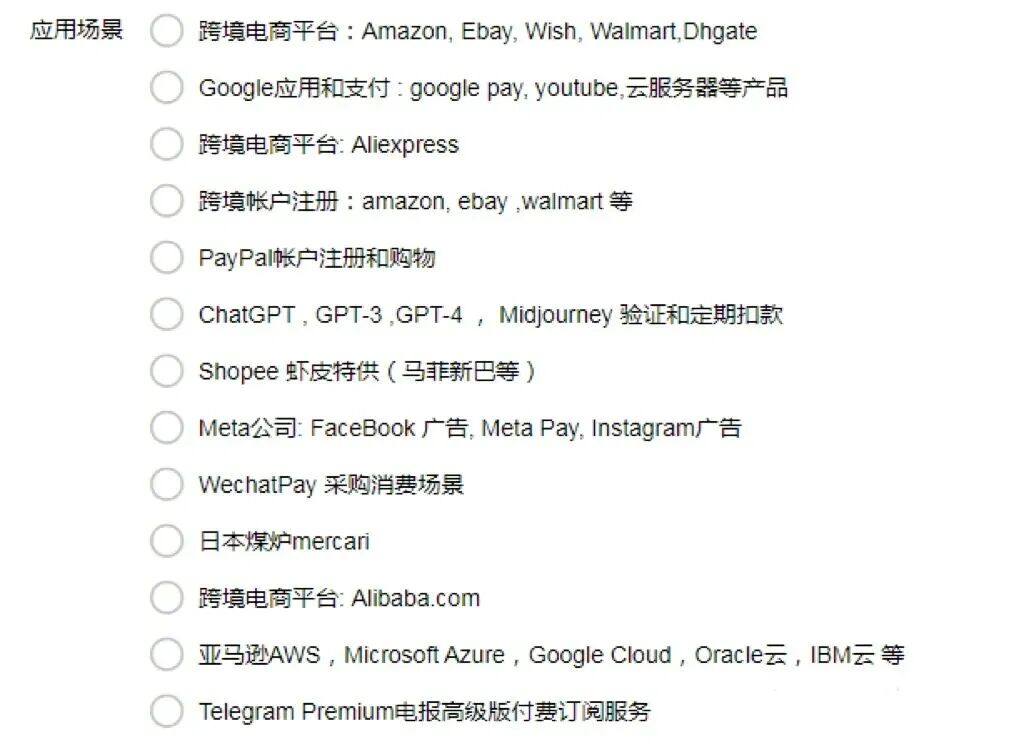
Background: What real payment scenarios are virtual cards suitable for?
From the actual use point of view, virtual cards are mainly suitable for the following types of needs.
1. Cross-border advertising and store service deductions
To run ads on Facebook, Google, TikTok, etc., or to pay for Shopify store monthly rent, domain name, email, SaaS tools, product selection tools, etc., virtual cards will be more convenient to manage than using personal physical cards.
In this kind of scenario, the stability of the card is more important. Especially for advertising accounts, try not to frequently change cards, frequently recharge small amounts, or repeatedly bind cards in a short period of time. When platform risk control sees abnormal payment behavior, it is easy to increase the probability of review.
2. Overseas software and subscription services
Like AI tools, design software, servers, media memberships, office software, etc., many require monthly or annual subscriptions.
Please note here: disposable cards may not be suitable for subscription. Subscription services usually require renewal, pre-authorization or small-amount verification. It is best to choose a card that supports long-term holding and sustainable deductions, rather than just “fast card opening”.
3. Cross-border procurement and international online payment
Overseas e-commerce procurement, logistics services, enterprise tool procurement, overseas website registration, etc., as long as the merchant supports the corresponding card organization and card issuance area, you can generally try to use it.
However, “can try” does not mean “guaranteed success”. Different merchants have different restrictions on virtual cards, prepaid cards, card issuance areas and payment frequency. It is recommended to test the channel stability with small-amount transactions first.
4. Team expense management
For teams or enterprises, the greatest value of virtual cards is actually cost isolation.
One card for advertising expenses, one card for software subscriptions, one card for purchasing expenses, and one card for employee business trips. Each amount of money corresponds to a purpose, and subsequent reconciliation, accounting and risk control are clearer. When encountering abnormal deductions, there is no need to stop the entire main card.
Pain point: What are the key points of a useful virtual card?
1. Look at the card segment and card issuance area, not just “how many cards can be opened”
Many customers will ask “Is the more card segments the better?” uncertain.
Having more card segments means more room for choice; but what really matters is whether the card segments are stable, whether the card issuer is clear, and whether it is suitable for your target merchants. For example, the card requirements for advertising deductions, software subscriptions and cross-border purchases are not exactly the same.
Don’t just pursue “multiple countries and multiple card segments”, but choose based on your own merchant region, transaction currency and payment type.
2. Check whether your payment method is supported
Some cards are suitable for one-time payment, some are suitable for periodic subscriptions, some are suitable for continuous deductions from advertising accounts, and some do not support pre-authorization or refund.
It is best to check a few questions before opening a card:
- Whether to support subscription renewal;
- Whether to support pre-authorization and small amount verification;
- Whether refunds are supported;
- Whether to support multiple deductions;
- Is there any limit on single transaction, single day or single month quota;
- What will happen when the balance is insufficient.
These details are often more important than “whether the card can be opened?”
3. Check the currency, exchange rate and handling fee
Cross-border payment is not just about the card opening fee.
Ask about recharge fees, currency conversion fees, transaction fees, failure deductions, refund cycles, and withdrawal rules in advance. Especially for customers who run advertisements or high-frequency purchases for a long time, the rates are slightly different, which means a considerable cost in the long run.
4. Look at backend management and risk control capabilities
For an easy-to-use platform, the backend should at least facilitate you to do these things:
- Check balance and transaction details at any time;
- Set the card limit individually;
- Freeze, delete or reissue cards in a timely manner;
- Turn on transaction reminder;
- Block or appeal abnormal transactions.
It’s not scary if there is a problem with the card. What’s most scary is that you can’t find the record and can’t find someone to deal with it.
5. Look at the after-sales service, not just the price
Virtual cards are payment tools. Transaction failures, deduction delays, refunds not arriving, and merchant risk control interception may all occur.
Really experienced users usually don’t just look for the cheapest card, but pay attention to: whether there is anyone who can check after the problem occurs, how long it takes to reply, and whether the specific reason for the transaction can be given.
Low price is not necessarily an advantage. Stability and after-sales service are the keys to long-term use.

Current situation: How to apply for a virtual card?
The process for different platforms will vary, but it usually includes the following steps:
- Register an account through official channels;
- Complete identity or enterprise verification as required;
- Recharge and apply for the corresponding type of virtual card;
- Obtain card number, expiration date and security code;
- Carry out small test transactions first, and then use them for formal payments.
If it is used by a team or enterprise, it is recommended to separate the card uses from the beginning and do not mix all payments in the same card. The subsequent reconciliation, risk control or quota management will be much easier.
Solution: Details you must pay attention to when using virtual cards
- Do not give your card number, security code, or login password to others at will;
- Set a clear purpose and reasonable limit for each card;
- Regularly check balances, transaction records and subscription deductions;
- Try to avoid frequent card changes, frequent unbinding and rebinding of advertising accounts;
- Do not leave the balance in an idle card for a long time;
- If you encounter abnormal deductions, take a screenshot as soon as possible to keep the transaction record;
- Before use, confirm whether the merchant accepts virtual cards, prepaid cards or the corresponding card issuance area;
- Comply with the rules of the card issuing platform and payment merchant, and avoid using it for illegal or high-risk purposes.
One final word: Virtual cards are not a “universal payment tool,” but when used correctly, they can indeed make cross-border payments, advertising deductions, and team expense management a lot easier.
When choosing a card, don’t just ask “can it pass?”, first think clearly about where you want to use it, whether you need long-term deductions or one-time payment, and whether you need multiple currencies and team management. Once these issues are sorted out, it will be easier to choose the card.
Virtual Card
Original article by Virtual Card Reviews & Cross-Border Payment Guides. If republishing, credit the source: https://visaspay.com/en/how-to-choose-a-virtual-card-in-2026-multiple-scenarios-multiple-card-segme/