Virtual Card
Update date: August 3, 2026
Applicable objects: Cross-border e-commerce, overseas warehouses, brand overseas teams, purchasing departments and financial personnel.

The difficulty in cross-border corporate procurement often lies not in “whether an order can be placed”, but in who can pay, how to control the budget, how to write off orders, and how to trace refunds when they occur. After using virtual cards (VCC), companies can manage a purchase, a supplier or a project in a dedicated card, making the process between procurement, finance and operations clearer.
Virtual cards are not a tool to bypass merchant region, tax, shipping address or risk control requirements. Its real value is to break down enterprise payment permissions: control by person, project, merchant, amount and validity period.
1. Which cross-border purchasing scenarios are suitable for using virtual cards?
- Purchase office supplies, samples, packaging materials or operational supplies on overseas retail platforms such as Target, Amazon, and Walmart.
- Replenish overseas warehouses with low-volume test products, display props or daily consumables.
- Purchase unrestricted products such as photography lights, storage supplies, printing supplies, and household samples.
- Assign separate budgets to different sites, different product lines, or different buyers.
- Manage multiple types of overseas expenditures such as advertising, SaaS, logistics, procurement, etc. at the same time to avoid mixing primary cards.
Take Target as an example. It is one of the overseas retail scenarios suitable for enterprises to make scattered and compliant purchases, but it is not a wholesale channel. You should still confirm product inventory, delivery area, return rules, tax and merchant terms before placing an order. Target may request payment card information, billing address, and shipping information at the time of transaction; information should be true, consistent, and verifiable.View Target Terms and Conditions
2. 6 places where virtual cards can make cross-border purchases more convenient
| Procurement pain points | What to do after using the virtual card | Convenience to enterprises |
|---|---|---|
| Multiple people share one main card | One card for one person, one project or one supplier | Reduce the leakage of card numbers and unclear responsibilities. |
| Budget is easily exceeded | Set single transaction, single day or monthly limit | Lock in your budget before purchasing. |
| Difficulty in reconciliation | Each card is bound to a project number or purchasing purpose | Finance can directly collect costs by card. |
| Merchant deduction risk | Set merchant restrictions or freeze cards depending on the card platform’s capabilities | Reduce unexpected renewals or erroneous deductions. |
| It’s too late to apply for funds for temporary purchases | The card will be opened immediately after approval | Reduce procurement waiting time. |
| Difficulty finding refunds | Keep the original card, order number, receipt and logistics records | Easier to match refund with original order. |
Core Principles: Think of virtual cards as “controllable purchase payment vouchers” rather than ordinary bank card replacements.
3. Recommended corporate procurement process
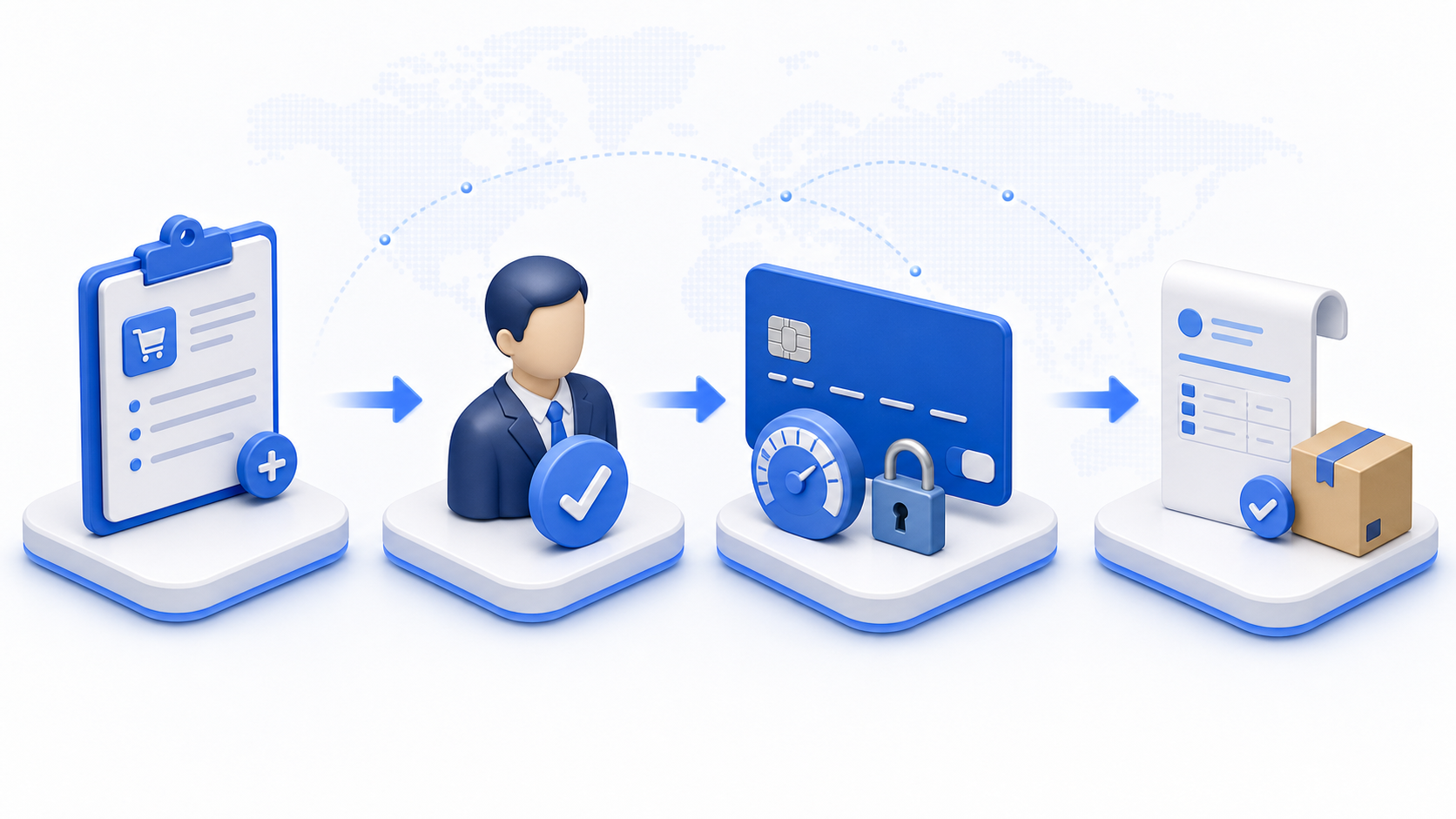
- Purchaser submits requirements: Product link, SKU, quantity, usage, estimated total price, and delivery method.
- Approver confirmation: Budget, procurement necessity, merchandise compliance and supplier rules.
- Card opening by finance or administrator: Set the limit, validity period, project notes and user.
- The buyer places an order: Only use virtual cards exclusive to this project.
- Archive after placing order: Order number, payment screenshot, invoice or receipt, logistics order number.
- Receipt and acceptance: Check whether the quantity, specifications, quality and purchase application are consistent.
- Reconciliation and closing: Freeze or close temporary cards that are no longer in use after financial write-off.
The advantage of this is that even if a payment fails, refund is delayed or abnormal deduction occurs on a certain card, the specific purchaser, order and project can be quickly located.
4. Purchasing from Target and other overseas retailers: practical points to note
When purchasing on retail platforms such as Target, it is recommended not to interpret the “virtual card” as a guarantee of payment. Whether a merchant accepts a card depends on the card organization, card issuer, billing information, order risk, shipping address and checkout page rules.
Target’s current payment instructions list payment methods such as prepaid cards with the Visa, Mastercard, Discover or American Express logo, but this does not mean that all virtual cards will necessarily be available. Whether it actually goes through or not depends on the checkout page and the card issuer’s rules.View Target payment method instructions
It is recommended to place an order in the following ways:
- Use real corporate or authorized purchasing information.
- The billing information is consistent with the virtual card issuer record.
- Do not change cards frequently, submit orders repeatedly, or change addresses.
- Each supplier should try to use an independent purchasing card to facilitate subsequent refunds and reconciliations.
- For first-time cooperative merchants, first test the complete process with small-amount, low-risk orders.
- The delivery address should be a warehouse, office or compliant transshipment address owned or authorized by the enterprise.
- Do not purchase goods that are restricted, subject to export control, infringement or violation of platform rules.
Target’s online return process relies on evidence such as order confirmation emails, account order records, or barcodes; when processing offline returns, the original payment method may also be required. Therefore, do not rush to cancel the original virtual card before a refund occurs, and keep complete order and payment records.View Target return help
5. How should the purchasing card be set up?
| Scene | Recommended settings |
|---|---|
| Single sample purchase | Single transaction limit + short validity period + closed after order completion. |
| Regular replenishment from overseas warehouses | Monthly limit + fixed buyer + independent project notes. |
| Purchasing from retail platforms such as Target | Exclusive merchant card or exclusive project card to avoid mixing with advertising and SaaS. |
| Multi-person purchasing team | Cards are divided according to buyers, and an approval limit is set. |
| High refund rate category | Keep the original card valid and keep the order and logistics vouchers intact. |
| Temporary emergency procurement | Only open the required amount and do not keep the balance for a long time. |
The most common mistake companies make is to put advertising, AI subscription, procurement, and logistics on one card. In this way, once a chargeback, refund or abnormal deduction occurs, it will be difficult for the finance department to determine which business it belongs to. A better approach is to “divide cards according to purpose.”
6. The cost cannot only be based on the recharge fee
| Cost items | Common Sources | Management suggestions |
|---|---|---|
| Card opening fee | Virtual Card Platform | Confirm the charge per card, per month or per card segment. |
| Recharge fee | USDT, bank card or other deposit channels | Compare the actual arrival cost. |
| Exchange costs | Consumption in non-settlement currencies | Understand the exchange rate and currency conversion rules. |
| Payment fee | International merchants, digital services or specific categories | Confirm merchant rates before purchasing. |
| Refund cycle | Merchant, acquirer, card issuer | Keep the original card and complete order receipt. |
| Logistics and return costs | Transshipment, warehousing, return shipping costs | Included in procurement gross profit and budget accounting. |
7. How to deal with purchase failure or refund?
| Question | Priority investigation |
|---|---|
| Payment declined | Whether the card supports online international payment, whether it has sufficient credit limit, and whether the billing information is consistent. |
| Merchant requires verification | Whether it supports 3DS/SCA and whether the verification can be completed in time. |
| Order canceled | Receiving information, inventory, merchant risk control or product restrictions. |
| The payment has been deducted but the order has not been generated. | Do not pay twice, check the order email and card transaction status first. |
| Refund not received | Check the refund status, whether the original card is still valid, and the card issuer’s refund rules. |
| Financial reconciliation cannot be done | Find project notes, order numbers, purchase requisitions and card schedules. |

8. Checklist for the person in charge of corporate procurement
- □ The purchased goods, quantity, purpose and budget have been approved.
- □ Merchant, shipping, tax and return rules confirmed.
- □ Use a dedicated purchasing virtual card that does not mix with advertising or SaaS spend.
- □ Reasonable limit, validity period and transaction notification have been set.
- □ The billing information and receipt information are true and consistent.
- □ The order number, payment receipt, invoice and logistics information have been saved.
- □ Planned retention of the original card and archiving of vouchers during refund.
- □ It has been confirmed that the goods do not involve restricted, illegal or illegal purchases.
Conclusion: The biggest convenience of virtual cards is not “making payments easier”, but allowing companies to turn cross-border purchases into a standard process that can be approved, limited, tracked, reconciled and reviewed. For small-volume, test, and daily operational purchases at overseas retailers such as Target, dedicated virtual cards are particularly useful for helping teams reduce primary card exposure, shorten approval times, and improve financial management efficiency.
Tips: This article is a compilation of corporate procurement process and payment management experience, and does not constitute a payment approval commitment by the platform or card issuer. Rates, regional support, payment rules and refund policies may be adjusted. Please refer to the merchant’s checkout page, terms of service and card issuer’s current rules.
Virtual Card
Original article by Virtual Card Reviews & Cross-Border Payment Guides. If republishing, credit the source: https://visaspay.com/en/how-to-use-virtual-cards-for-cross-border-corporate-purchases-quota-approva/