Virtual Card
This article focuses on the process of allocating purchasing cards by supplier or order and recording them. Continue reading:General Guide to Corporate Procurement | Monthly reconciliation method
Cross-border procurement does not end just by “passing through”. If the sample is cancelled, which card will be refunded to? If the procurement specialist is replaced, how will the new colleague know the supplier’s payment records? After a master card is shared by multiple projects, how does finance distribute the amount back to each cost center?
The greatest convenience of VCC for the procurement team is to turn a payment into a traceable record. It cannot replace contracts, customs declarations, taxes, sanctions screening or supplier due diligence, but it can keep “who applies, who pays, how much is paid, where the refund goes, and who reconciles” in the same workflow.

The unit for dividing the card is recommended to be the supplier or order
Suppliers with stable cooperation can configure special cards; order cards with validity periods and upper limits are more suitable for one-time proofing, emergency replenishment or short-term projects. Don’t cover every scenario with a “purchase backup card”—it’s convenient, but it makes chargebacks, disputes, and reconciliations ambiguous.
| Procurement scenario | Card Settings | Required content for approval | Refund Processing |
|---|---|---|---|
| Regular repurchase | Supplier special card | Contract/Quotation, Budget Attribution | Keep the original card until the refund is completed |
| Proofing and trial order | Order Card | Product details, order number, upper limit | Record cancellation window |
| Urgent replenishment | Short-term credit card | Emergency reasons, authorized person | Do not mix with other orders |
| Large-amount batch purchase | Project card or multiple order cards | Batch plan, delivery date, amount | Reconciliation by batch |
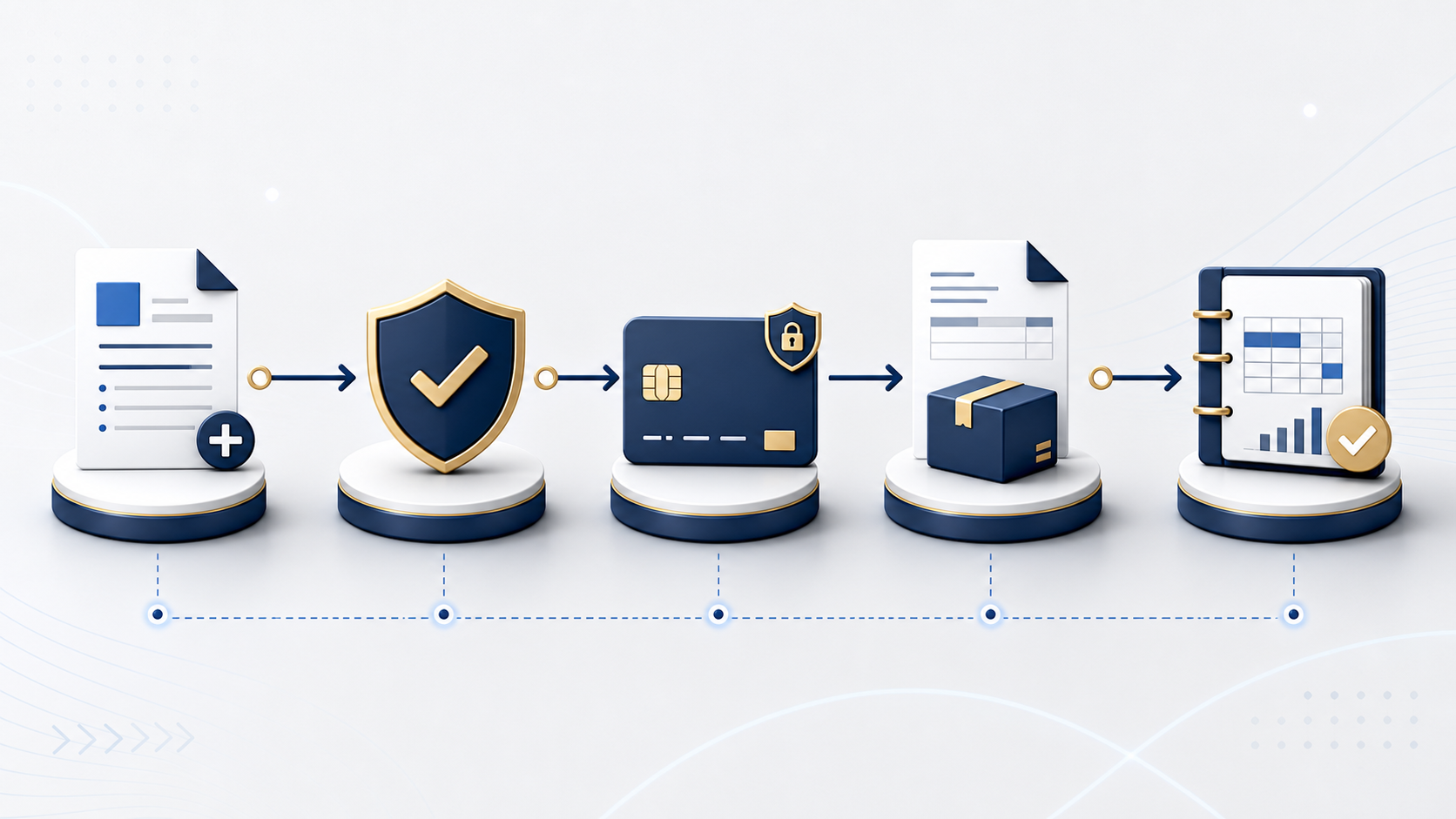
SOP does not have to be complicated, but it must have a closed loop
A process that can be implemented usually only has five steps: the applicant submits the order and the purpose; the approver checks the budget and the supplier; the card administrator sets up a card or raises the amount according to the approved amount; the purchaser retains the payment and order vouchers; the finance department checks the transaction, bill and refund status at the end of the month.
Don’t treat refunds as a minor after-sales matter. Refunds typically involve return routes, processing times, currency differences and card status. If the purchasing card has been closed or the person responsible has resigned, follow-up can be very passive. For cards with outstanding refunds, first confirm the rules with the service provider before deciding whether to deactivate them.

What details are the convenience reflected in?
Purchasing personnel no longer need to hold the main card or make frequent advances; project leaders see the cards and orders for their own projects; finance can check accounts by supplier, order number and card tail number; when problems occur, there is no need to search for clues in multi-person chat records. For cross-border teams, the real savings are in coordination and traceability time.
Cross-border procurement payment list
- The supplier name, order number, amount, and currency are consistent with the purchase order.
- The card is only used to identify suppliers or orders and does not allow for borderless sharing.
- The single and periodic quota shall not be higher than the approved procurement budget.
- Save your refund policy, cancellation deadline and contact details before paying.
- There are traceable responsible persons for procurement, approval, payment, receipt and reconciliation.
- Internal corporate processes have been followed when restricted categories, cross-border transportation, tax or compliance risks are involved.
If you are just starting to build a purchasing card system, you can first select a project with the most refunds, the most suppliers, or the most frequent handovers for trial use. This scene best illustrates the value of card splitting and approval.
Virtual Card
Original article by Virtual Card Reviews & Cross-Border Payment Guides. If republishing, credit the source: https://visaspay.com/en/how-purchasing-virtual-credit-cards-are-allocated-by-suppliers-and-orders-p/