Virtual Card

Many teams’ monthly reconciliations begin and end in a transaction export table. The problem is that there are recharges, completed purchases, processing pre-authorizations, refunds, and disputed transactions mixed in and out. If you just add up all the negative numbers for the month, it’s easy to mix “temporary freeze” with “real expenses.”
A useful virtual card reconciliation form does not pursue as many fields as possible, but allows finance, business leaders and managers to have the same understanding of the same money: where it comes from, where it is spent, what its current status is, and who will follow up next.
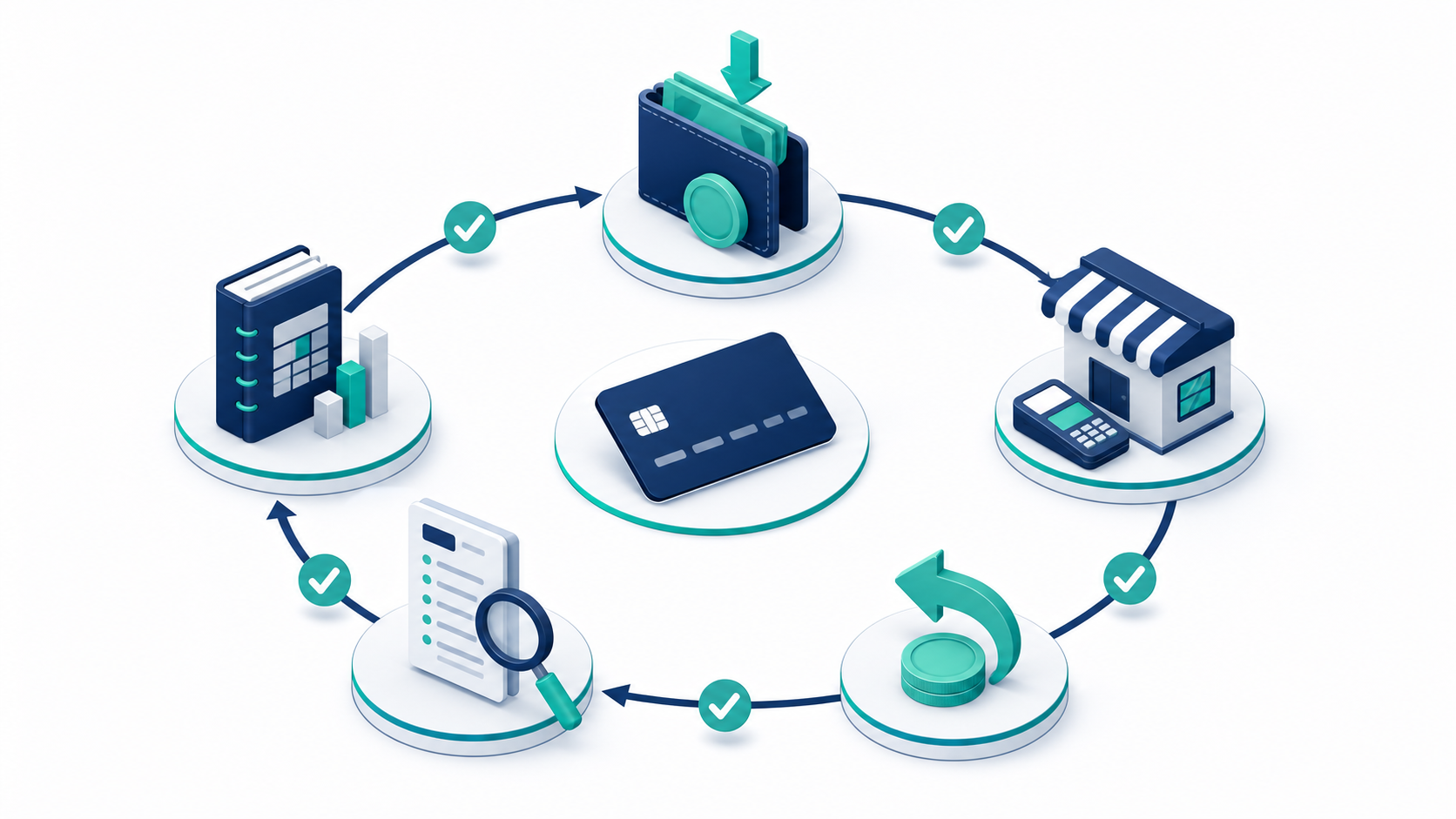
Enterprise virtual card reconciliation depends on the complete closed loop of funds
Monthly accounting can be divided into five categories of actions: recharge into account, card authorization, merchant liquidation, refund return, dispute or chargeback processing. Not every transaction will occur on the same day, so the reconciliation cannot only look at one date.
| Status/Action | How to record in the table | What should you focus on when reconciling the monthly accounts? |
|---|---|---|
| Recharge | Currency, network, on-chain hash, amount received, fees | Are the recharge records consistent with balance changes? |
| Authorization/Processing | Merchant, amount, card last number, time of occurrence | Whether it is normal pre-authorization and whether it has not changed for a long time. |
| Cleared consumption | Order number, project, person in charge, final amount | Whether there are business vouchers and expense attribution |
| Refund | Merchant refund number, original order, refund time, status | Whether to return to the original path and whether it has been recorded |
| Chargeback/Dispute | Original transaction, submitted materials, processing node | Whether the evidence is retained according to the rules and the deadline |
Why just looking at the transaction export table is not enough
You can create the following columns in the table without having to do it all at once:
| Field | Purpose |
|---|---|
| Transaction date and time zone | Avoid placing transactions in the wrong month across time zones |
| Card tail number and card label | Corresponds to the specific person in charge, project or purpose |
| Merchant name and order number | Allow financial records to be returned to business vouchers |
| Transaction Type | Recharge, authorization, liquidation, refund, chargeback, fee |
| Original currency amount and settlement currency | Distinguish the merchant’s display amount and final payment method |
| Current status | Processing, completed, canceled, refunded, in dispute |
| Project/department/person in charge | Used for budget attribution and approval tracking |
| Certificate link or storage location | Orders, invoices, contracts, refund emails, etc. |
| Follow up with people and deadlines | Prevent refunds and disputes from going unhandled for a long time |
The three most easily missed checks at the end of the month
First time: Card side transaction pair internal order
Every cleared purchase should have an order, contract, subscription or purchase purpose. For transactions where the business voucher cannot be found, mark them separately and do not directly classify them as “miscellaneous expenses”.
Second time: internal order to merchant record
When a merchant order shows cancellation, partial refund or repeated order, it must be marked in time. A successful refund on the merchant page does not necessarily mean that the card has been credited, and records must be kept on both sides.
Third: Opening Balance + Top-up – Cleared Expenses ± Refund/Fees, to Ending Balance
The formula itself is not complicated. The difficulty lies in the processing of authorization, exchange rate differences and unreceived refunds. If they don’t match up, don’t adjust the book figures first; make a list of differences first, and determine whether they are pending, expense, exchange, or abnormal one by one.

Follow the steps to complete a monthly reconciliation
- Lock the transaction export and balance screenshots of the previous month at the beginning of the month;
- Combine recharge, card transactions, merchant orders, refunds and dispute records;
- Marks processing transactions and estimated processing date;
- Let the person in charge of each project complete the missing vouchers and their uses;
- Generate a list of differences and identify the next follow-up person;
- Managers review large, abnormal or long-term unfinished projects;
- Carry this month’s budget, renewal and refund risks into next month’s plan.
Monthly reconciliation list
- □ Exported recharge, card transaction, refund and dispute records
- □ Each cleared consumption corresponds to the order, project and person in charge
- □ Distinguished between authorization in processing and final consumption
- □ Refund number, original order and payment status verified
- □ Reasons for currency exchange, service fees or balance differences have been recorded
- □ Different transactions have a follow-up person and next step date
- □ Invoices, contracts and payment vouchers have been kept in accordance with company regulations
- □ Checked card permissions, idle cards and automatic renewal for next month
Monthly reconciliation is not a “make-up job” done by the financial department alone. Purchasing, advertising, technology and operations all write down the purpose of transactions clearly, so that finance can truly reflect balances, expenses and risks. The earlier the reconciliation is done, the less likely chargebacks and abnormal transactions will become historical problems.
Reminder: Transaction status, settlement date, refund cycle, exchange and dispute handling depend on the merchant, card issuing service and applicable rules. This article is a reference for internal management of enterprises. For specific accounting, taxation and compliance handling, please follow local laws, company systems and professional opinions.
Related reading:2026 Cross-border Enterprise Procurement VCC Guide: Limits, Approval, Reconciliation and Refund SOP | What else is there besides the 1U card opening fee? Enterprise VCC True Cost Breakdown | ChatGPT, Claude, Gemini team payment and expense management
Virtual Card
Original article by Virtual Card Reviews & Cross-Border Payment Guides. If republishing, credit the source: https://visaspay.com/en/corporate-virtual-card-monthly-reconciliation-template-how-to-count-recharg/