Virtual Card
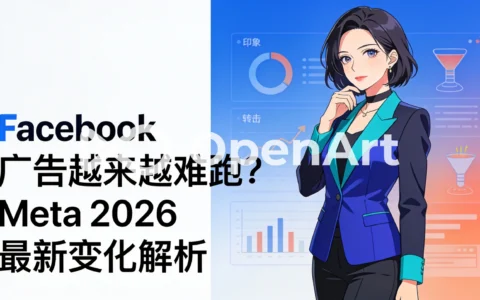
Many foreign trade teams do Facebook advertising. The most common situation is: the budget has been spent and people have been working overtime, but effective inquiries have not increased significantly.
Selecting the audience relies on experience, the copywriting is improvised, and the materials are changed repeatedly. After the advertisement is launched, I stare at the background data, but I don’t know whether the problem lies in the orientation, creativity, or follow-up. In the end, we can only keep increasing the budget, changing materials, and adjusting settings.
Facebook placement certainly requires a budget, but the higher the budget, the better the effect will be.
For B2B foreign trade, the core of advertising is not to get more exposure or likes, but to find people who are closer to the purchasing decision-making and bring them into the inquiry process for sustainable follow-up.
The value of GPT is not to make placement decisions for you, but to speed up a large number of repetitive tasks in audience research, content preparation, data collection and customer responses, allowing the team to leave time for more important judgments and follow-up.
Let’s talk about a set of working methods that are more suitable for foreign trade B2B scenarios from the four links of pre-investment preparation, material production, placement optimization and inquiry acceptance.
Background: Why can’t foreign trade Facebook advertising only look at “good-looking data”?
Many newcomers have just started advertising on Facebook, focusing on exposure, number of likes, and number of fans on their homepage.
These data are not without value, but they cannot replace valid inquiries if the ultimate goal is to acquire overseas buyers.
1,000 general likes is not as good as 10 target customers visiting the homepage;
100 invalid clicks are not as good as 1 buyer who comes to consult with clear needs.
Foreign trade Facebook placement is more like the front end of the customer acquisition funnel: the advertisement is responsible for attracting the right people, the homepage, landing page, WhatsApp, email or LinkedIn are responsible for undertaking, and the business staff completes the screening and follow-up.
Therefore, please confirm three questions before placing it:
- What type of customers do you hope to attract;
- What will customers do after watching the advertisement;
- What kind of consultation is considered an effective inquiry?
If these three things are not clear, the subsequent orientation, materials and budget will easily lose direction.
Pain point: Without customer portraits, interest words and budget will be wasted
The most likely waste of budget is at the beginning.
When many accounts go online, they just choose a few broad interest words based on their feelings. As a result, the ads reach a large number of people who are not the target customers. By the time it was discovered that the cost was high and inquiries were few, the budget had already been consumed.
Instead of opening the backend to select the target from the beginning, it is better to use GPT to clearly disassemble the customer portrait.
Information that needs to be provided to GPT includes:
- Product Category;
- Target market;
- Target customer type;
- Common purchasing scenarios for customers;
- Known competitors;
- Product advantages and boundaries that cannot be promised.
For example, you can ask:
I am engaged in exporting outdoor amusement equipment, mainly to the UAE and Saudi markets. Target customers include general engineering contractors, import wholesalers and real estate purchasers. Please analyze the purchasing concerns, common concerns, industry content that may be of concern to these three types of customers, and the communication angles suitable for advertising creativity. Don’t make up specific company, data, or platform targeting tags.
The content output by GPT cannot be directly used as a conclusion, but it can help you quickly form the first version of your hypothesis.
For example, general engineering contractors usually pay more attention to project adaptation, certification, delivery and installation support; wholesalers pay more attention to minimum order quantity, price space and supply stability; real estate purchasers may pay more attention to cases, design style and project matching.
These differences determine what the advertising copy should emphasize and how subsequent tests should be grouped.
Orientation is not about “the more words, the better”
In the Meta advertising backend, the audience conditions available will vary by account, region, and advertising goals. Do not include all GPT-generated interest, behavior, or people suggestions without filtering them.
A safer approach is:
- Split the audience hypothesis into different ad groups to test;
- Observe broad interests, industry-related interests and remarketing groups separately;
- Use the actual optional audience conditions in the background for verification;
- Eliminate inefficient combinations based on inquiry quality rather than simply click-through rate.
For regions, age groups or existing customer groups that are obviously not in line with business goals, exclusion conditions can be set based on the actual situation of the account. But don’t think of “exclusion” as a universal solution. The key is still to clearly define who you want to find first.
Current situation: Materials, tests, reports and remarketing are often handled separately
B2B advertising materials can easily fall into a misunderstanding: sending product pictures every day without explaining why customers are worth consulting.
A product material does not have to be complicated, but it must answer at least one question.
For example:
- Whether the product is suitable for a certain project scenario;
- How to verify quality;
- Whether to support customization;
- How to pack and deliver;
- Do you have service experience in similar markets or industries?
- What problems can customers solve after getting the product?
By handing these issues over to GPT, the content framework can be formed faster.
It is recommended to prepare materials based on five types of perspectives:
- Pain point type: Directly respond to customers’ biggest concerns, such as delivery time, quality, certification or installation difficulty;
- Case type: Show real projects, application scenarios or customer feedback;
- Knowledge-based: Explain product selection, purchasing precautions and common misunderstandings;
- Comparative type: Explain the differences between different materials, processes or configurations;
- Trust type: Showing the factory, testing, packaging, packing and shipping processes.
Taking amusement equipment as an example, instead of just putting one product picture, it is better to separate the insulation test, material details, customized logo, packaging method and actual project photos into different materials.
Customers may not necessarily place an order immediately because of an advertisement, but they will use this information to judge whether the company is professional, whether the product is reliable, and whether it is worth initiating communication.
Use GPT to prepare copywriting in batches, but don’t copy it directly
You can first determine the product, market, target customers and conversion goals, and then let GPT generate multiple copywriting versions from different angles.
For example:
Please generate 10 pieces of English copy for Facebook feed ads based on the following information. The products are outdoor amusement equipment, and the target customers are engineering contractors and importers in the Middle East. The copywriting focuses on project safety, customization capabilities, delivery process, quality inspection and case display. Limit each entry to 60 to 90 words and contain a clear but not overly committed lead to action. Certifications, case quantities, prices and delivery times may not be fabricated.
After generation, manual review is still required:
- Whether the product parameters are accurate;
- Whether the certification is authentic and valid;
- Whether the delivery date and price can be promised externally;
- Whether the English expression complies with the habits of the target market;
- Whether there are exaggerated publicity or compliance risks.
GPT is responsible for providing the first draft and testing direction, and people are responsible for checking.
The video does not have to be complicated, but the rhythm must be clear
B2B videos don’t necessarily need complex plots. Actual product shots, factory pictures, testing processes, packaging and shipping, and project pictures can all become materials.
A 15-second video can have a simple structure:
- First 3 seconds: Raise customer concerns;
- Middle 7 seconds: Show product, factory or project evidence;
- Last 5 seconds: Describe the next step, such as obtaining a catalog, confirming the minimum order quantity, or consulting on a customization plan.
GPT can assist in generating storyboards, subtitles and multi-language first drafts, but the final pictures and information must still be based on real materials.
Solution: Use AI to establish a reusable delivery iteration process
When many accounts test materials, the copywriting, pictures, audience and landing pages are changed at the same time. Even if the final effect is better, it is difficult to determine which factor played a role.
A more efficient way is to test only one variable at a time.
For example:
- Keep the audience the same and just test different beginnings;
- Keep the material unchanged and only test different action guidance;
- Keep the copy unchanged and only test different video covers;
- Keep the ad creative the same and just test different audience combinations.
You can hand over the original copy to GPT, let it generate multiple sets of single-variable versions, and then put them online for testing one by one.
The purpose of this is not to let GPT replace judgment, but to improve testing efficiency and provide a clear basis for subsequent review.
AI is responsible for sorting, but people are still responsible for decision-making
Many operators only look at how much money they spend and how many clicks they get every day, but do not form a fixed data analysis method.
After exporting the Facebook ad report, you can upload the CSV or table to ChatGPT and ask it to be organized by audience, material, placement, time period, and conversion. ChatGPT supports analysis of common tables and CSV files, but only if the data fields are clear and the goals are clear.OpenAI official description
For example:
This is a Facebook ad serving report. The goal is to obtain effective procurement inquiries, and the target cost of a single effective inquiry is 150 yuan. Please analyze according to audience, material, placement and delivery period to find out the better and worse performing combinations, and point out the three optimization directions for the next round of priority verification. Please distinguish between “data facts” and “speculative suggestions.”
Allowing GPT to distinguish between facts and suggestions when outputting can prevent it from writing correlation directly into causation.
When looking at the data, it is recommended to focus on:
- Which audiences bring inquiries closer to the target customers;
- Which materials have more stable click-through rates, interactions and conversions;
- Which ad groups have high consumption but lack effective consultation;
- In which time periods or regions the inquiry quality is better;
- Which ads are showing signs of material fatigue.
The focus of optimization is not to make frequent major changes, but to gradually reduce invalid tests and tilt the budget towards proven combinations.
Integrate remarketing into the complete funnel
Cold audience advertising is responsible for letting unknown customers know you, while remarketing is responsible for making people who have already contacted you take further action.
People who have viewed the homepage, watched the video, visited the website, clicked on the link or submitted the form are usually more worthy of continuous communication than traffic from complete strangers.
Content can be differentiated by behavior:
- To home page interactors: show cases, factories and brand strength;
- To website visitors: display specific products, application scenarios and inquiry portals;
- For video viewers: Supplement product details, testing processes or customer FAQs;
- For customers who have consulted but have not advanced: provide catalogs, sample information or clearer next-step guidance.
Remarketing is not simply to push the same advertisement repeatedly, but to supplement the information that the customer still lacks based on what he already knows.
7. Inquiry acceptance determines the second half of advertising effectiveness
The click-through rates of many accounts are not bad, but the number of inquiries never increases. The problem often lies in the acceptance process.
After the customer sends a message, the reply is too slow, the reply is too general, or the reply cannot be quickly directed to the specific needs, the customer is likely to contact other suppliers instead.
GPT can help the team prepare response frameworks for different scenarios in advance, such as:
- Customers make direct inquiries;
- Customer requests product catalog;
- Customers have specific project needs;
- Customer inquires about MOQ, delivery date, certification or samples;
- Customers use minority languages to communicate.
But one thing needs to be clear: any reply involving price, inventory, delivery date, certification, contract and after-sales commitments should be manually confirmed before being sent.
GPT can be used to generate a draft reply, which can then be supplemented and reviewed by business personnel based on real business conditions. This improves response speed and avoids false promises.
The easiest pitfall in execution
1. Only pursue page likes
Page likes can be part of brand exposure, but they should not be the core metric for B2B customer acquisition.
If the goal is to obtain purchase leads, you should focus more on messages, forms, website visits, and effective inquiries rather than the superficial number of fans.
2. A piece of material will not be changed for a long time
The effectiveness of material will decline with time, audience coverage and market environment changes.
There is no need to redo the entire content every day, but you should continue to prepare new angles, materials, and copywriting versions to avoid relying on a few ads for a long time.
3. Only look at clicks, not the quality of inquiries
A high click-through rate does not mean that only purchasing customers are brought in.
Advertising optimization should not only look at the front-end data, but also take the inquiry quality, response rate, quotation rate and subsequent transactions into consideration.
4. Ignore remarketing and customer follow-up
Advertising does not bring instant transactions, but a batch of leads that need to be screened and cultivated.
Without remarketing or timely follow-up, no matter how good the front-end advertising is, traffic will easily be lost.
Finally
Foreign trade Facebook advertising is not about “the bigger the budget, the better the effect”, nor is it “the longer you work overtime, the more inquiries you have.”
The truly effective approach is to break down advertising into a set of processes that can be run repeatedly: identify customers first, then prepare content; do small-scale testing first, and then gradually expand based on real data; advertising is responsible for bringing leads, and the business team is responsible for turning leads into opportunities.
GPT cannot decide the budget for you, nor can it judge the product, price and customer value for you.
But it can make the originally time-consuming work of research, copywriting, form organization and response preparation faster and more organized.
Handing over repetitive work to tools and leaving judgment to people is the most practical way to use GPT for foreign trade Facebook placement.
Virtual Card
Original article by Virtual Card Reviews & Cross-Border Payment Guides. If republishing, credit the source: https://visaspay.com/en/dont-rely-on-staying-up-all-night-to-launch-foreign-trade-on-facebook-use-g/